
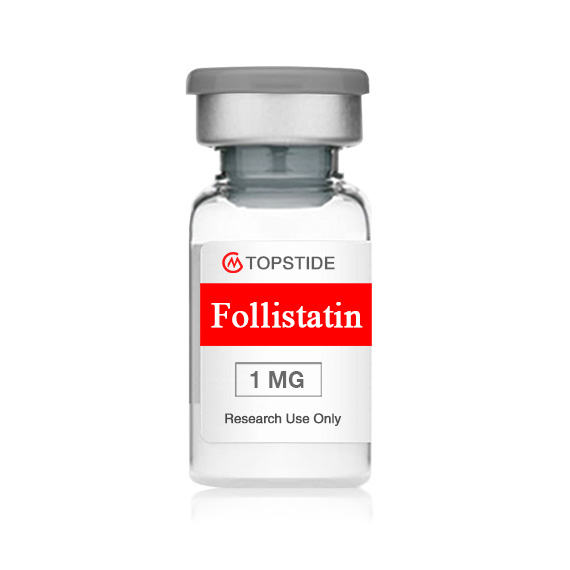
Follistatin 1MG·10vials
$310.00
Description
Product Information
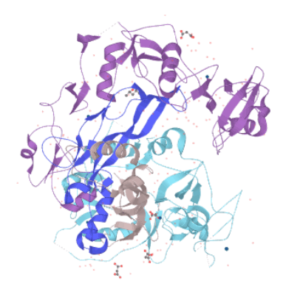
Name: Follistatin; Follistatin 344; FST 344
CAS No.: N/A
Sequence: MVRARHQPGG LCLLLLLLCQ FMEDRSAQAG NCWLRQAKNG RCQVLYKTEL SKEECCSTGR LSTSWTEEDV NDNTLFKWMI FNGGAPNCIP CKETCENVDC GPGKKCRMNK KNKPRCVCAP DCSNITWKGP VCGLDGKTYR NECALLKARC KEQPELEVQY QGRCKKTCRD VFCPGSSTCV VDQTNNAYCV TCNRICPEPA SSEQYLCGND GVTYSSACHL RKATCLLGRS IGLAYEGKCI KAKSCEDIQC TGGKKCLWDF KVGRGRCSLC DELCPDSKSD EPVCASDNAT YASECAMKEA ACSSGVLLEV KHSGSCNSIS EDTEEEEEDE DQDYSFPISS ILEW
Molecular Weight: 3780 g/mol
Appearance: White Lyophilized powder
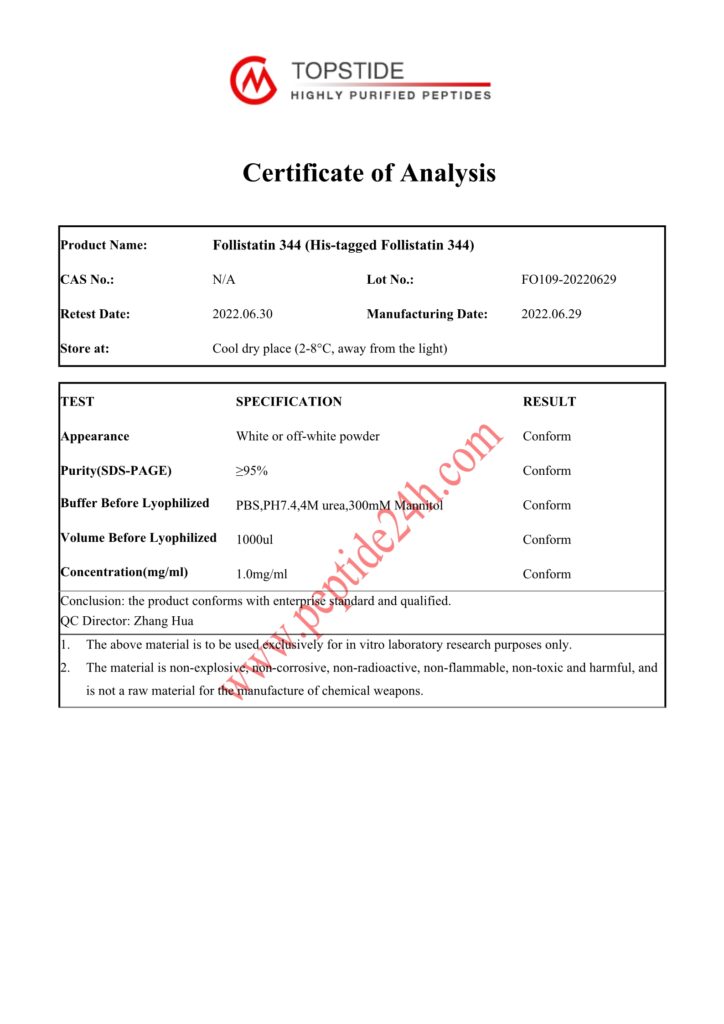
What Is Follistatin 344?
Follistatin (FST) 344 is a synthetic version of the naturally occurring human follistatin protein. Follistatin is found in nearly all tissues of higher animals and comes in two separate isoforms as a result of alternative gene splicing. Its primary biological function is neutralization of proteins in the TGF-beta superfamily. It has particularly potent neutralizing effects on activin, myostatin, and follicle-stimulating hormone.
Follistatin Research and Muscle Growth
Myostatin is a protein produced by muscle cells themselves that inhibits muscle cell growth and differentiation. It is a member of the TGF-beta protein family and therefore is susceptible to inhibition by follistatin. Previous research has shown that animals lacking myostatin have significantly more muscle mass and are stronger than normal. This led scientists to speculate that administration of follistatin could improve muscle growth and help to treat a number of medical conditions, like muscular dystrophy, that impact muscle growth and strength.
In mouse models, follistatin has been shown to increase lean muscle mass without the need for special dietary or exercise requirements. After just eight weeks of follistatin injections, mice in the treatment group had 10% more muscle mass than mice in the control group. This, again, is a result obtained without exercising the mice or subjecting them to special diets, indicating that gains could be even more substantial with appropriate training.
Research in everything from mice to monkeys has shown increased muscle size and strength when follistatin therapy is initiated. There is hope that the protein can be used to treat muscle disorders, such as inclusion body myositis, that have so far proved relatively resistant to pharmacologic intervention. Research in mouse models of Duchenne muscle dystrophy (DMD), for instance, show that follistatin treatment leads to hypertrophy of skeletal muscle while also reducing inflammation and fibrosis. The benefits are dose-dependent and lead to clinically relevant changes in strength in the setting of DMD. These are significant findings that could help doctors to reduce or eliminate the weakness associated with certain muscle disorders, thereby restoring quality of life and reducing morbidity in these conditions.
Product Usage:THIS PRODUCTIS INTENDED ASARESEARCH CHEMICAL ONLY.
Additional information
| Size |
|---|


Reviews
There are no reviews yet.